Betting odds are one of the first things every beginner sees when opening a sportsbook or betting app. It is the soul and mathematics of betting, and is the singular most important aspect that bettors must know.
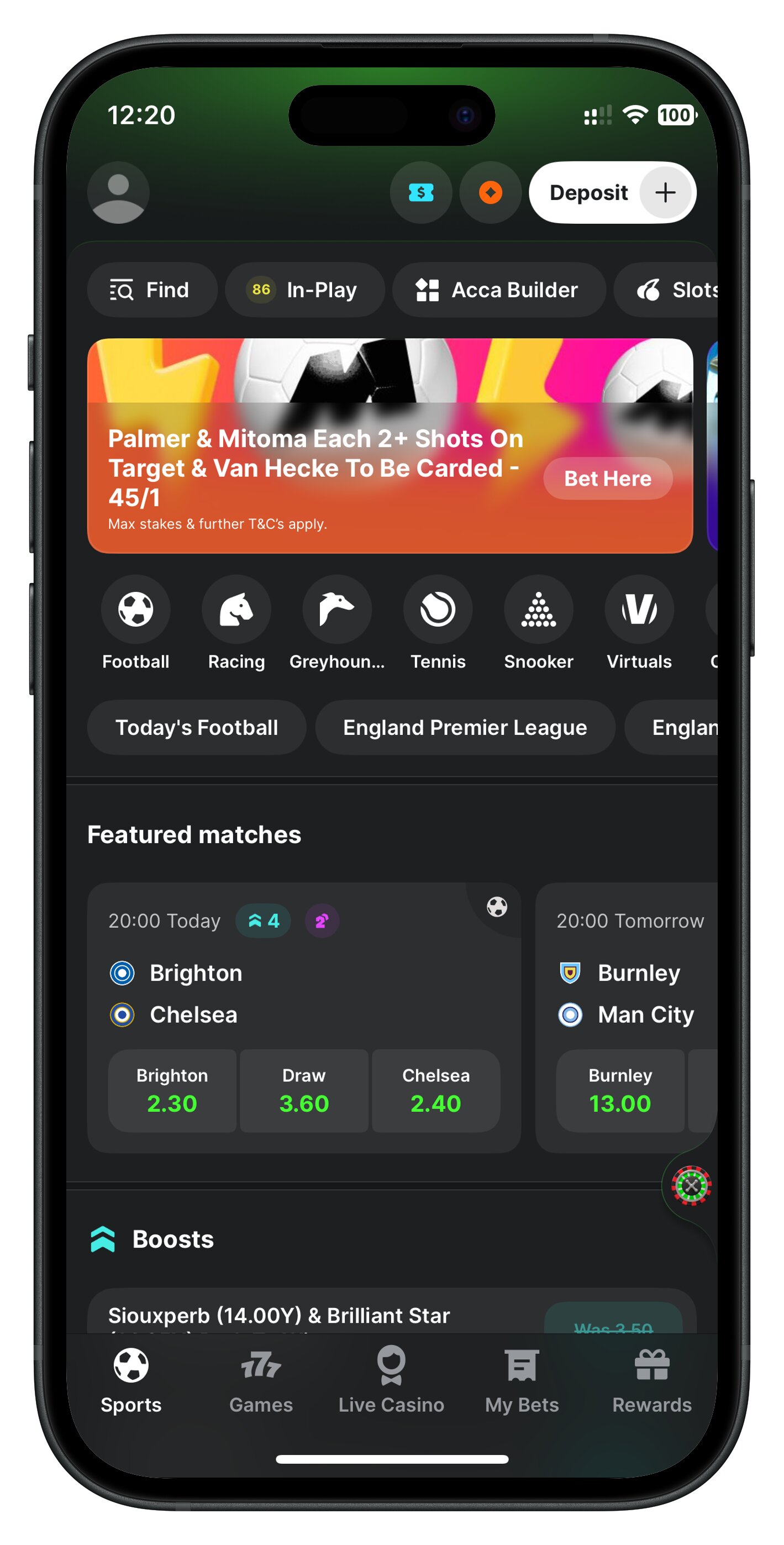
Midnite app homepage with decimal odds
This guide explains how betting odds work, how payouts are calculated, and what different odds formats actually mean in practical terms.
Table of Content
What Are Betting Odds?
Betting odds represent two things:
- How likely an outcome is to happen
- How much money you can win if your bet succeeds
For example, if a football team has decimal odds of 2.00, a £10 bet would return £20 total if the bet wins.
The lower the odds, the more likely the bookmaker believes the outcome is. Higher odds usually indicate a less likely result — but with bigger potential payouts.
Why Betting Odds Exist
Bookmakers use odds to price sporting events and balance risk across all possible outcomes.
Odds are calculated using statistics, market demand, injuries, form, historical performance, and many other variables.
As bets come in from customers, bookmakers may adjust odds to reduce their exposure and encourage betting on the opposite side.
How Decimal Odds Work
Decimal odds are the most common format used in the UK and Europe.
The calculation is simple:
- Stake × Odds = Total Return
- Your stake is already included in the return
Example
- £5 bet at odds of 3.33
- £5 × 3.33 = £16.67 return (gross)
- Profit: £16.67 - £5 (stake) = £11.67 (net)
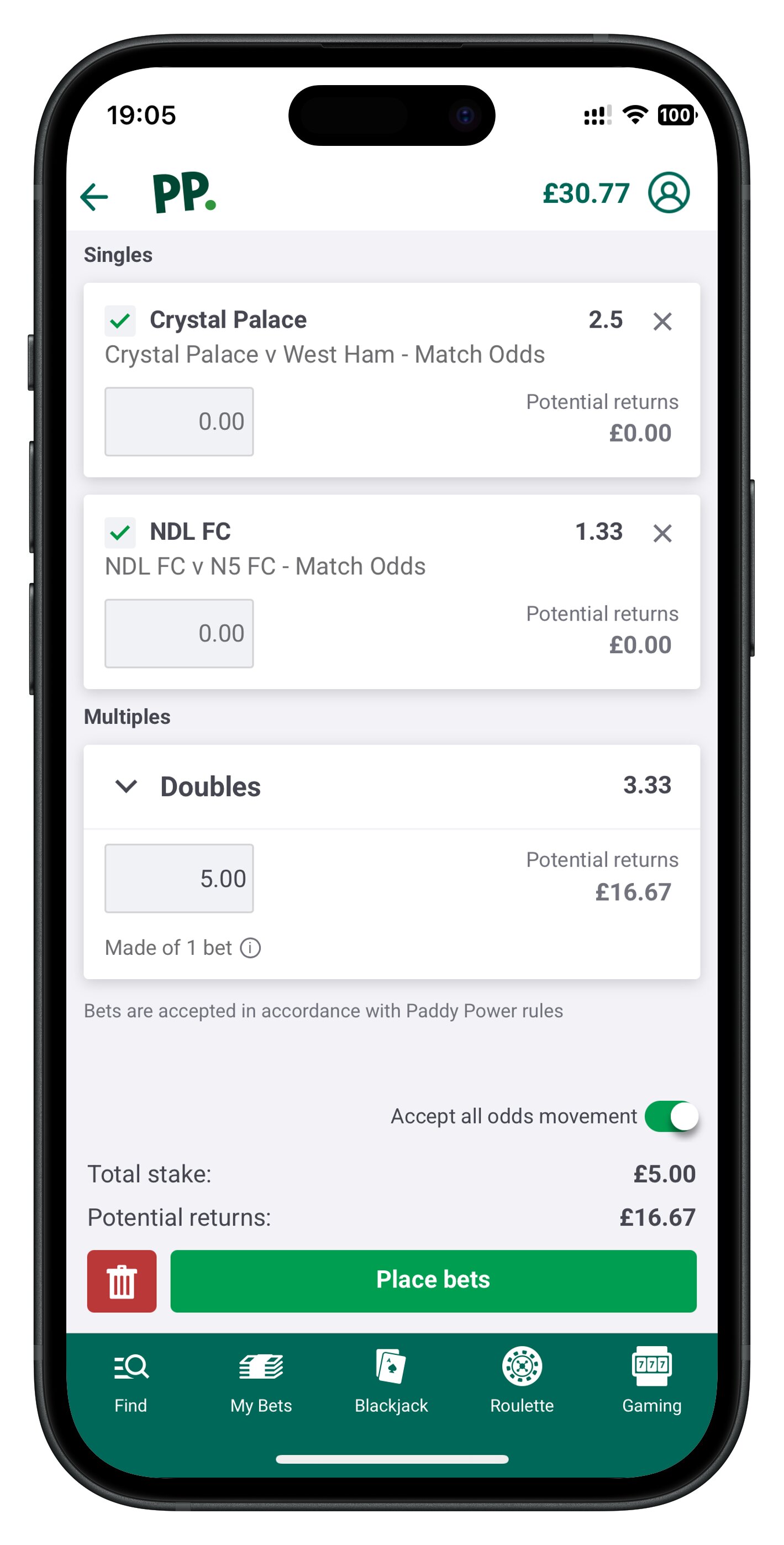
Paddy Power app: acca with potential returns (gross)
Decimal odds are generally the easiest format for beginners because calculations are straightforward. However, it is common for beginners to forget that the stake is included in the return, leading to overestimation of returns.
How Fractional Odds Work
Fractional odds are traditionally used by UK bookmakers and horse racing markets.
Example: 5/1
- For every £1 you bet, you win £5 profit
- Your original stake is returned separately
- £10 bet returns £60 total (£50 profit + £10 stake)
Common fractional odds include:
- 1/1 (even money)
- 2/1
- 5/2
- 10/1
The biggest difference between decimal and fractional odds is that when you win, in decimal odds, the stake is included in the return, whereas for fractional odds, the stake is returned separately. This also means that the fractional odds is always 1.0 lesser than decimal odds visually (i.e., your stake).
How American Odds Work
American odds are mainly used in US sportsbooks.
Positive Odds Example (+200)
- Bet £100 to win £200 profit
- Higher positive numbers mean bigger payouts
Negative Odds Example (-150)
- You must bet £150 to win £100 profit
- Negative odds indicate favourites
Many UK betting apps allow you to switch between decimal, fractional, and American formats in settings. However, based on extensive testing across at least 50 licensed bookmakers, all betting apps in the UK support at least decimal and fractional odds, and almost all default to fractional odds.
It is highly recommended for beginners to switch to decimal odds, as it is much simpler.
P.S. I never understood what made the US invent awkward measurement units (pounds, feet, miles, you get the drift).
What Odds Say About Probability
Odds also imply how likely an outcome is according to the bookmaker.
Example
- Odds of 2.00 imply roughly a 50% chance
- Odds of 1.50 imply roughly a 67% chance
- Odds of 5.00 imply roughly a 20% chance
This does not guarantee outcomes — it simply reflects the bookmaker's pricing model and the betting market. Bookmakers will often bake their cut into the odds in order to earn a commission off your bets. For example, a bookmaker may only offer 1.70 on an outcome that they have decided has a 50% chance of happening, so as to profit on that 0.30 difference.
This is also one of the reasons why different bookmakers can offer different odds; some bookmakers may not mind earning less commission if it gets them volume.
How Betting Payouts Work
Your payout depends on:
- Your stake amount
- The odds at the time you placed the bet
Simple Example
- Stake: £20
- Odds: 1.80
- Return: £20 (stake) × 1.80 (odds) = £36
- Profit: £36 (return) - £20 (stake) = £16 (net)
If the bet loses, you lose the amount staked. It is important to note that payout is almost exclusively dependent on the odds at the time you place your bet. Simply put, a bet can also be considered a contract between you and the bookmaker. Hence, you are protected from odds movement against your favor (conversely, you are also susceptible to movements where odds become more favorable).
Why Betting Odds Change
Betting odds can change before and during events. Odds are usually relatively stagnant before events (also known as pre-game or pre-match), changing only once every few minutes.
Common reasons include:
- Injuries or team news
- Heavy betting activity
- Weather conditions
- Live match events
- Market sentiment
Live betting (also known as in-play) markets can change extremely quickly, especially in football, tennis, and horse racing. This volatility also affects live betting — it usually takes a few seconds (<5s) to place a bet during live betting, during which a bet can fail to be placed due to movements.
Common Beginner Mistakes With Odds
New bettors often misunderstand what odds actually represent. While betting apps make placing bets extremely easy, understanding the odds behind those bets is what separates informed betting from random guessing.
Assuming Low Odds Guarantee a Win
One of the most common beginner mistakes is assuming that low odds mean a bet is "safe" or guaranteed to win.
For example, odds of 1.20 may suggest a very strong favourite, but favourites still lose regularly in sports. Injuries, red cards, weather conditions, and unexpected performances can completely change outcomes.
Low odds simply indicate that the bookmaker believes the outcome is more likely — not certain.
Ignoring Implied Probability
Many beginners focus only on the payout amount without considering what the odds imply about probability. For example:
- Odds of 2.00 imply roughly a 50% chance
- Odds of 5.00 imply roughly a 20% chance
- Odds of 10.00 imply roughly a 10% chance
Understanding probability helps you make more rational betting decisions instead of chasing large returns blindly.
Only Betting on High Payouts
High odds can look exciting because of the potential returns, especially for accumulators and bet-builder bets. However, higher payouts usually exist because the outcome is significantly less likely.
Many beginners repeatedly place unrealistic bets hoping for huge wins, only to lose consistently over time.
A more balanced approach is to focus on value and probability rather than chasing the biggest possible payout every time.
Not Checking Odds Movement
Odds can change rapidly before a match starts, especially in popular sports like football and horse racing.
If odds suddenly shorten or drift significantly, there is often a reason behind it — such as injuries, lineup announcements, or heavy betting activity.
Beginners often place bets without noticing these changes, missing important information that may affect the value of the bet. It is therefore crucial to establish at least one reliable source of information in order to keep up with the latest updates to make informed decisions.
Confusing Return With Profit
Another common mistake is misunderstanding the difference between total return and actual profit.
For example:
- £10 bet at odds of 2.00
- Total return: £20
- Actual profit: £20 - £10 (stake) = £10 (net)
For decimal odds, your original stake is included in the total return shown by betting apps, which can confuse new bettors initially. This is complicated by the fact that fractional odds does not use the same logic — the fraction itself is your net profit.
Understanding odds properly is one of the biggest steps toward becoming a more informed bettor. Even basic knowledge of probability and payouts can help you avoid many beginner mistakes.
Which Odds Format Is Best for Beginners?
For most beginners, decimal odds are the easiest to understand because payout calculations are simple and immediate.
Unfortunately, in my experience, most UK betting apps use fractional odds by default, and this problem is exacerbated by how hidden the odds format switching feature is. For example, in some apps it appears directly in account settings, for others it may be located right at the bottom of the homepage. Nevertheless, the odds switching feature always exist, and bettors simply need to find it once.
This post is part of our complete beginner's guide to betting apps. If you're completely new to sports betting, I highly recommend that you should start from the very first post.